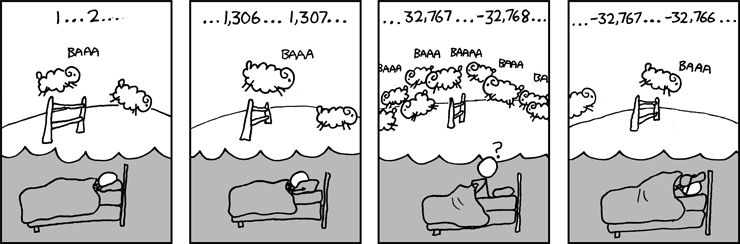
A very serious bout of insomnia (I literally was awake all night) recently reminded me of how neglected this blog is and how easy it is to put this subject aside when I am not suffering from sleep problems. Aside from an occasional thought like, "Gee, I'm glad I'm not having all those insomnia problems now," it's easy to get sidetracked when things are going well. Of course, the flipside of that is when there is LOSS*, it is very difficult to blog.
*If you are just tuning in, a detailed explanation of the acronym LOSS can be found in my introductory post here.)
So. This recent insomnia also reminded me that it I am never guaranteed to be free of sleep issues and that I still need to maintain my good sleep hygiene (a term you will find if you do a bit of research on insomnia, particularly on the internets.) So I thought I would list some of the things that I have used, past and present, to help with sleep, starting with the ones I found most effective. The less effective ones may be saved for another post.
(Usual disclaimer: I am not a health practitioner; any course of treatment should be preceded by consultation with a health professional; the following remarks are from my own experience and/or research and what works for me may not work the same for you; use your own judgment.)
1. Winding down. This means avoiding stimulating activity such as watching TV or using the computer (I'm very bad about this one.) Turning down lights if necessary. Preparing the mind and body for the onset of sleep. Dr. Rubin Naiman discusses this at length in his book Healing Night (a book I have mentioned before and will continue to recommend throughout this blog, since it is so amazing.) If you want to see what he has to say on the subject, see Chapter 3, "Dusk: Surrendering To Sleep."
2. Tea. There are many tea options. For starters, there is good old Celestial Seasonings Sleepytime tea (you know, the one with the bears on the box.) I find that I like the flavor of this the best. It may be a nostalgic sensation, since I had this tea as a child. The herbal formula includes ingredients like chamomile and tilia flowers, commonly found to promote rest and relaxation. Sometimes, however, you need something that packs a bit more punch. Celestial Seasonings now makes a "Sleepytime Extra" which contains valerian, the mother of all herbal sedatives. I have tried this, but I felt a little too knocked out by it initially, which led me to decide I needed to control the amount of valerian myself. After consulting with a naturopath (which is what all of you are going to do before trying any of these, right? especially if you are pregnant) I got a dropper bottle of valerian tincture and added it to the tea itself.
However, valerian by itself has proved to be less effective than I would like. A high dose makes me feel drugged; a low dose doesn't have enough affect. I attribute this to valerian's function as, from what I understand, more of a physical relaxant than a mental one. To that end, I've added herbs like passionflower and meadowsweet to the arsenal. I have found passionflower to be particularly effective in easing mental anxiety and restlessness. Sometimes I take passionflower extract in tea by itself. The other two teas I use from time to time are Yogi Tea's Bedtime-which contains perhaps the most comprehensive blend of herbs to relax both body and mind, including passionflower, and has a very pleasant taste thanks to some cardamom and spices-and Traditional Medicinals' Nighty Night, which contains hops and catnip for an extra wallop (when I drink this one I definitely sleep like a log.)
I think changing the remedies from time to time is a good tactic for me, as it seems to keep my body from getting too used to one certain remedy and perhaps becoming inured to it. I don't claim to understand how all of this works; I only know what seems to work for me. The mind can be a tricky thing when convincing us of certain things. As Dr. Naiman points out, it is folly to become superstitious about one specific remedy or bedtime ritual, since the goal is to be able to sleep naturally and without the strong need for rituals and remedies. I remind myself of this when I get too dependent on a specific approach.
Which brings me to 3. Melatonin. This supplement may be well known to those who travel overseas often. It's often used to help reset one's internal clock when disrupted by a radical change in time zones. Melatonin, from what I understand, is stored in the body and released at a certain time of evening to signal the body to go to sleep. It does this based on the rhythm of daylight and darkness, so if you are deprived of light during the day and/or have bright lights at night, things may get thrown off. (That is my extremely nonscientific explanation.) Taking melatonin an hour or two before bedtime can help reset the body's internal clock.
I was given this by my naturopath during a very difficult bout of sleep problems. Only recently did I learn that it is not meant for very long term use (I had been using it for over 2 years) and the body's ability to sleep on its own is like a muscle that can atrophy if unused. Point being, once again, the goal is to get to a natural state of sleep, not to find a magic pill that will do it for me. (This is my own personal goal, because I value balance and holistic health for my body.) This is easy to say in theory but much harder in practice. I had become superstitious about the melatonin ritual in the way that Dr. Naiman warns against. So I stopped taking it. Nothing changed drastically, until the bout of extreme insomnia about a week or so later. But who can say they are related? In any case, I am determined to train my body to go to sleep when it needs to, and melatonin will be used for cases where I know there will be a large disruption in the sleep schedule.
4. Hot baths. This is a small one, but important. The ritual helps my body relax and get into sleep mode. Intense hot water and steam creates a drowsy sensation. The same can be said for hot tea, even without the herbal benefits discussed earlier. I would drink warm milk, but I am sensitive to dairy.
Incidentally, (since this would be related to baths), I know that lavender is considered a very effective relaxant when used in aromatherapy. I have experienced its relaxing effect generally, but when I've attempted to use it as a sleep aid I've gotten really weird results (wakefulness, disturbing dreams.) This has happened more than once so I avoid lavender for this purpose. I just mention this in case someone is thinking, "why isn't she talking about lavender?" I'm sure for other people it's fine.
5. Benadryl. I have mentioned in previous posts, I think, that I don't think there is a magic pill, and generally speaking I have found medication to be ineffective in the long term-for reasons I will go into later. However, for emergency situations, I have found Benadryl (drug name Diphenhydramine) to be most effective. Now, let me make one thing clear first-the brand name Benadryl is an antihistamine, and I am not trying to condone using an OTC medication for purposes other than what is indicated. However, if you look at several of the OTC sleeping aids on the market, you will find they have the exact same ingredient: only diphenhydramine. It is exactly the same as the antihistamine, only packaged differently. This was a revelation to me, and now I just buy whichever is cheapest or readily available.
I have found this to be the most effective medication because it works to knock me out, and although I am groggy for some time in the morning, it does not have any of the other more unpleasant side effects I've experienced with other pills. (By the way, I only take 1/2 a pill and that is plenty for me-a whole pill can make me sleep 10 hours or more, which is usually not necessary.) The grogginess is not ideal, so I definitely see this as a last resort (or emergency plan-for instance, if I know I will be sleeping somewhere I am likely to have difficulty getting to sleep and I have to drive the next day, like on a road trip.) Also, I use it sparingly because I know from experience that if used too often, it loses its effectiveness. This has also happened with all the prescription medications I tried, and I will go into the story of the failed remedies in my next post.
And with that, I've got to wrap this up, because although I am sure I failed to mention some remedies (such as deep breathing and mind-body exercises) I've got to get to bed and start that winding-down process by getting off the computer now. So I will leave with a promise to post again more frequently than I have been.
A good night's sleep to you all.
Tuesday, January 26, 2010

Saturday, May 30, 2009
Forget sheep; try a puppy
Just wanted to pop in quickly from the madness and note: 2 weeks ago I experienced another night of restless tossing and turning. The next day I met with friends for tea and we all ended up discussing sleep problems and the old "counting sheep" remedy, which we all had problems with (my sheep tend to jump backwards over the fence, mock me, huddle in groups and basically undermine the purpose of the counting sheep exercise.) My friend suggested an alternate method she uses: rather than counting something she just focuses on her breath, and when her mind wanders she says she doesn't get upset or try to start over with counting anything but she just gently calls her mind back to the breath "like a little puppy" that's wandered off. I thought that was a pleasant image, so since then I've been practicing that a bit when I go to sleep and using the little puppy metaphor to gently corral my attention back in place. So far, I've been getting to sleep well, although that could be a combination of factors (remember, I don't believe in a magic pill.) But I think this is definitely a helpful tool to be added to the box. So many thanks, Ariel! (who probably is not one of the 3 people who reads this blog, so I'll have to thank her directly.)
This blog will not be seeing much action for the next few weeks at least; for reasons why, see my midwest adventure blog.
This blog will not be seeing much action for the next few weeks at least; for reasons why, see my midwest adventure blog.
Sunday, April 19, 2009

Tuesday, March 10, 2009
Some symptoms of LOSS (Lack of Sleep Syndrome)
(as experienced by me)
All together now: Awwwwwww! Isn't it easy to dismiss that person as feeling way too sorry for themselves? That's kind of my reaction right now, except that I know that I wrote this. And that all the above symptoms are real.
- Irritability. Of course this one should be obvious, as in the "grumpy" person first thing in the morning. I posit that it's not just "grumpiness" as that implies it is not to be taken very seriously. I think the LOSS impairs my ability to get perspective and look at the bright side of things.
- Related to above, there is oversensitivity. I describe it as having little or no "filter" on me. I can't filter things out or prioritize their emotional effect. Everything is equally devastating, be it not getting what I want for lunch or hearing bad news about a friend. And if I get upset, I can't stifle it.
- Light sensitivity. OMG, turn down that bright light, pleeeeease! What do you mean, it's coming from the sky?? Who asked my permission to make it a sunny day??
- Loss of appetite: This one really sucks, because obviously having more food in me would give me more energy, and make me feel a little more grounded, less floaty.
- which brings me to: The floaty feeling! "Floaty" is actually not a good word. That makes it sound too pleasant. I do not enjoy it at all. It is mentally floaty but also physical, like I am sapped of all energy and strength.
- Also related to this: a strange ache in the muscles; not exactly the same as the achiness you get with a flu or sprain, but almost a sense of depletion as if the muscles aren't getting enough energy to function properly. Any demand put on them feels like 1000 times more effort than it really is. (Unfortunately, I've had a lot of time to explore this sensation and put it into words.)
- Impaired coordination. I am clumsy. I shouldn't try to do any intricate work or work that requires strict attention to detail or drive a car. Which is very dangerous. I will be devoting a whole post to the driving issue.
- Slow thinking: as if my response time has slowed way down. As my mom would say, "The synapses aren't firing quickly enough." I put this one here because it is linked to the above symptom. Putting these two together, it makes things very difficult if any of the following are planned for the day:
- Job, job interview, major networking event, major social event, tests, finals, papers due, anything requiring major decisions, giving a speech, performance.
All together now: Awwwwwww! Isn't it easy to dismiss that person as feeling way too sorry for themselves? That's kind of my reaction right now, except that I know that I wrote this. And that all the above symptoms are real.
Monday, March 9, 2009
"Late night, huh?" (wink wink)
I think one common misconception of lack of sleep is that it is due to a wild night out or something else that is within the person's control. It is slightly annoying to constantly hear "late night, huh?" with the implied suggestion that I spent my night doing something fun, or crazy, and ultimately I had a good time anyway so I shouldn't really feel that sorry for myself. When in fact it is almost always a night when I tried my best to get a good night's sleep-because that is almost every night. I cherish my sleep and go to great lengths to try to make sure I get it. If I know I am going to have a "late night" doing something fun, I make sure I will be able to sleep later in the morning.
More later. I just wanted to address this while it was still on my mind.
More later. I just wanted to address this while it was still on my mind.
Thursday, February 19, 2009
LOSS: Lack of Sleep Syndrome
I had this inspiration on New Year's Day, in California, a morning after yet another night of interrupted sleep. There was no real explanation for it, except maybe stress. Sometimes I just can't sleep. When it was happening to me more frequently I tried many things to remedy it. I'll list those at another time. Right now I just wanted to introduce this blog and the inspiration that came from that groggy morning. As I lay in bed thinking of the sleep-deprived day ahead of me, I thought about all the symptoms I would probably experience and it popped into my head that the experience should have a name, something like Loss Of Sleep Syndrome...hey, that spells LOSS...how clever...surely this already exists; I can't have just made it up? So as soon as I got up I checked the mighty Internet, and I found nothing known as Loss of Sleep Syndrome or LOSS. And of course, you know, if it's not on the Internets it must not exist...so voila! A new quasi-medical term was born, and apparently I get credit for it. Of course it was ironic that I thought of this in a sleep-deprived state. Sometimes interesting things can happen in this state. Usually though, it is just a drag.
So. What is this blog for? I want to talk about all the effects of LOSS. There are many different causes of sleep deprivation and a lot of discussion out there on these different conditions and their symptoms and treatments. However, since I don't appear to have a specific condition that causes these bouts of sleeplessness, I'm interested more in talking about the results of those bouts. I have a few reasons for doing this, but mainly I don't think there is enough out there on the subject. I think many people suffer from sleep deprivation, even deprive themselves of sleep deliberately, and shrug it off as no big deal. I am here to posit that it is a big deal. It is bad for the health, it is dangerous, and at the least it is inconvenient for those around us who deal with the aftereffects.
I will go into more details about these symptoms in later posts. For now, I just want to open this blog and state of course that I am not a medical professional and anything posted here will be purely my own opinion (unless of course I cite someone else); that I do not have advice to give and most of the contents will be of my own personal experience and mostly be ramblings on this topic and not conclusions or solutions. That said, I will welcome any contributions or suggestions along this topic. That would be the topic of sleep deprivation, it's symptoms and effects. I'm not really interested in specific sleep disorders or treatments. Although I will at some point list the various things I have tried to remedy lack of sleep-more for amusement and sympathy (if you've been there too) rather than as advice. If it helps you in doing your own research, great, but I know there is no magic bullet or cure and I think that every person has a different solution or combination of solutions that will work for them.
That being said, I will go so far as to highly recommend one book: Healing Night: The Science and Spirit of Sleeping, Dreaming and Awakening by Dr. Rubin Naiman. This is the single most useful and interesting book I have read about sleep and it significantly helped me to change my attitude about sleep problems, which I believe makes a huge difference. For me anyway.
Subscribe to:
Posts (Atom)